
Home > Products > Heat sink Industries > Semiconductor Cooling Module Heat sink
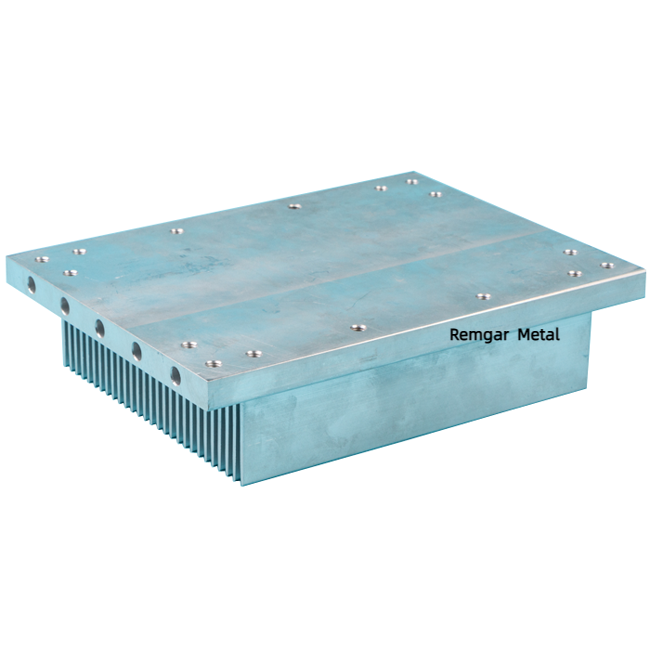
Semiconductor heat sinks, more formally known as thermoelectric coolers or Peltier effect coolers, are electronic devices that utilize the “Peltier effect” of semiconductor materials to achieve active cooling. Unlike traditional “passive cooling” methods such as air cooling or water cooling (which merely remove heat from the source and dissipate it into the environment), semiconductor heat sinks actively and directionally ‘pump’ heat from one end to the other, thereby achieving the desired “cooling” effect.
Advantages:
1. No moving parts, quiet and reliable: Absence of compressors or liquid circulation pumps ensures vibration-free operation, low noise, and extended lifespan.
2. Precise temperature control: By adjusting the magnitude and direction of input current, temperatures can be precisely regulated, achieving accuracy as tight as ±0.1°C.
3. Capable of cooling below ambient temperature: This represents its greatest advantage over traditional heat sinks. While air/water cooling can only bring objects close to ambient temperature, semiconductor heat sinks can easily cool objects far below ambient conditions.
4. Compact Size and Structure: Easily integrated into space-constrained devices.
5. Dual-Mode Cooling/Heating: Simply reverses current direction, ideal for applications requiring periodic temperature changes.
Primary Application Scenarios
1. Consumer Electronics (High-End PC/Server Overclocking)
2. Professional and Industrial Applications
· Laser cooling
· Medical and scientific instruments: PCR machines, blood analyzers, microscope cooling stages, etc.
· CCD camera cooling
· Compact temperature-controlled chambers
3. Daily Life Applications
· Mini Refrigerators/Car Coolers: Commonly found in small-capacity, portable products.
· Dehumidifiers: Absorb moisture from the air using the principle of condensation on the cold surface.
· Thermostatic Water Dispensers: Simultaneously provide cold and hot water.

 EN
EN