
Home > Products > Liquid Cold Plate > Vacuum Brazed Liquid Cold Plate
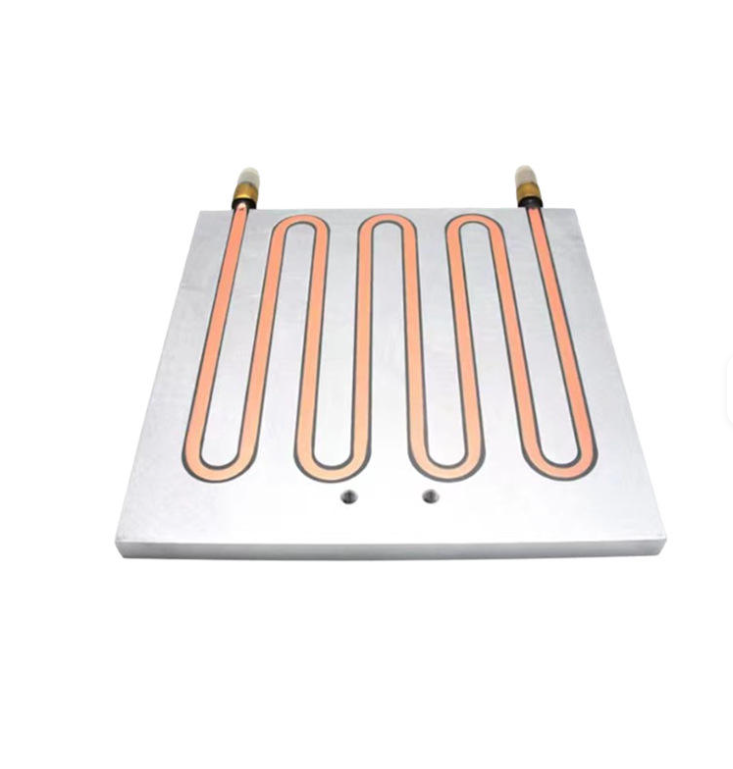
A liquid cooling plate is a metal device used to cool electronic equipment below its maximum operating temperature.It consists of at least one metal base (made of aluminum, copper, or steel) and an embedded metal tubing system.The tubing is embedded within the base, forming fluid flow channels.
The metal base makes direct contact with the electronic components requiring heat dissipation, absorbing their heat and transferring it to the coolant. The coolant then transports this heat away to a heat sink.
Liquid cold plates offer superior thermal conductivity compared to standard heat exchangers. Compared to other conventional coolers such as air-cooled radiators, liquid cold plates are more efficient at cooling electronic components.
As highly efficient heat exchangers, liquid cold plates significantly reduce component thermal loads, delivering cooling performance far exceeding traditional coolers. Compared to other conventional cooling systems, liquid cold plates can dissipate substantial amounts of heat from components.
This technology is particularly suited for heat transfer in high-heat-generating device components, ensuring systems consistently operate at optimal temperatures.

 EN
EN